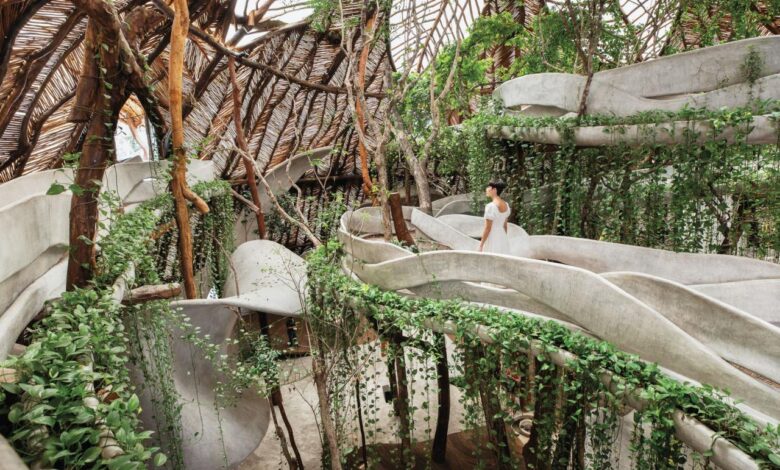
In a world dominated by concrete, glass, and steel, our connection to the natural environment has been profoundly severed. Modern urban life often separates us from the very elements that have shaped our evolution: sunlight, fresh air, and the presence of living things. This disconnect, however, is not without consequence. Studies have shown that a lack of exposure to nature can lead to increased stress, reduced cognitive function, and diminished overall well-being. A powerful and transformative solution is emerging from this realization: Biophilic Design. Far more than just adding a potted plant to a room, biophilic design is a holistic architectural philosophy that integrates natural elements and processes into the built environment to improve human health, productivity, and happiness. It’s a return to nature’s blueprint for living spaces, and it’s redefining the very essence of modern architecture. This article will serve as a comprehensive guide to biophilic design, exploring its core principles, its profound benefits, and the innovative ways architects and designers are using it to create spaces that are not just functional, but truly alive. We will delve into the science behind this movement, its practical applications, and the future it promises for our homes, offices, and cities.
The Science Behind the Philosophy
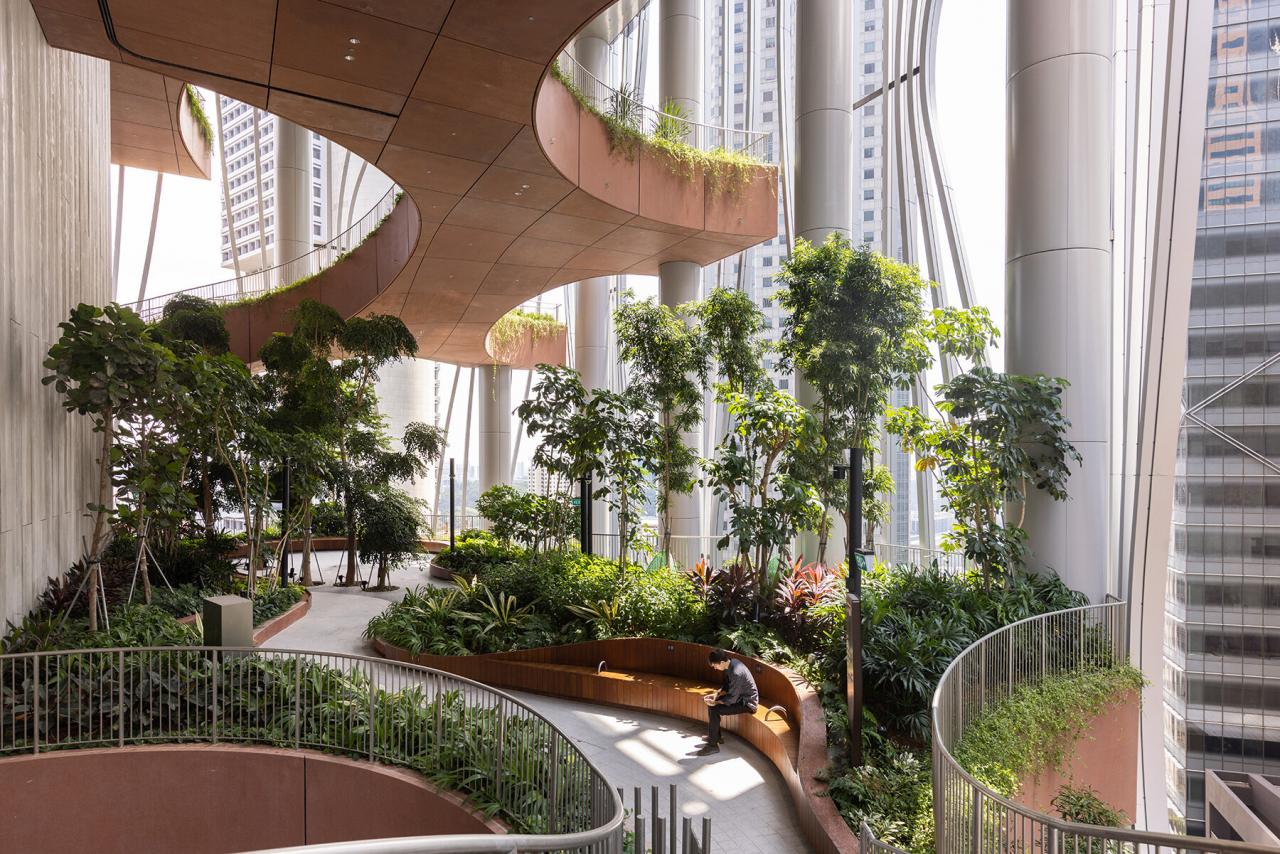
The term “biophilia,” coined by social psychologist Erich Fromm and popularized by biologist Edward O. Wilson, literally means “love of life.” The theory suggests that humans have an innate, genetic affinity for nature and all living systems. This isn’t just a spiritual or emotional connection; it’s a biological one. Our brains and bodies are wired to thrive in natural environments. Biophilic design leverages this innate connection by incorporating elements that mimic the natural world, triggering positive physiological and psychological responses.
A. Stress Reduction:
Exposure to nature has been scientifically proven to lower cortisol levels, the body’s primary stress hormone. A study from the University of Oregon found that workers with views of nature reported significantly lower stress levels than those without. This is because natural patterns and elements can induce a state of “soft fascination,” which allows the mind to wander and recover from mental fatigue. A biophilic office is not just a pleasant place to work; it’s a therapeutic environment that actively reduces the daily grind’s toll on our health.
B. Enhanced Cognitive Performance:
Biophilic design can directly improve our ability to think, focus, and be creative. The “Attention Restoration Theory” posits that directed attention, the kind we use for focused tasks, can become fatigued. Exposure to nature, however, allows our attention to be restored. This is why a simple view of a tree or a few moments spent near a water feature can help us recharge and return to a task with renewed focus and clarity. It’s a natural cognitive enhancer that costs nothing but good design.
C. Accelerated Healing and Well-being:
Hospitals and healthcare facilities are at the forefront of this movement. Studies have shown that patients with views of nature from their hospital beds recover faster, require less pain medication, and have shorter hospital stays. The simple presence of natural light, plants, and natural materials can create a calming, restorative environment that supports the body’s own healing processes. This application of biophilic design is a powerful example of how architecture can directly impact health outcomes.
Nature’s Core Elements
A biophilic design is built on a set of fundamental principles that go far beyond superficial green walls. These principles are divided into two main categories: Direct and Indirect Experience of Nature.
Direct Experience of Nature
These elements involve a direct, tangible connection to the natural world.
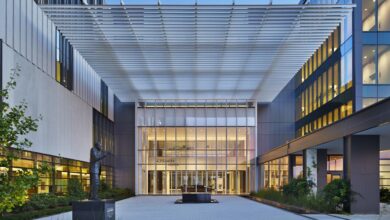
- A. Natural Light and Air: Maximizing access to natural light is the single most important element of biophilic design. It regulates our circadian rhythms, which are essential for good sleep and overall health. Using large windows, skylights, and courtyards to flood spaces with daylight is a foundational practice. Equally important is access to fresh air, which can be achieved through operable windows or advanced ventilation systems that bring in filtered outdoor air.
- B. The Presence of Water: The sight and sound of water are inherently calming. Incorporating water features, from small fountains to large ponds, can create a multi-sensory experience that reduces stress and adds a serene quality to a space.
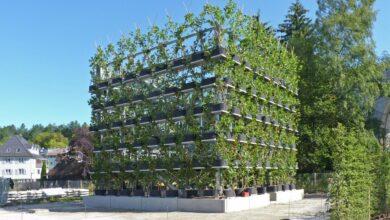
- C. Living Systems and Plants: This is the most visible aspect of biophilic design. Vertical gardens, indoor planters, and living walls not only add beauty but also improve air quality, reduce noise, and create a sense of life and vitality. It’s about creating a living, breathing space that changes and grows with time.
Indirect Experience of Nature
These elements involve the use of natural patterns, materials, and processes that evoke a sense of the natural world.
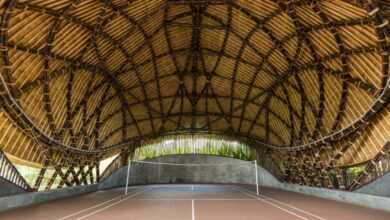
- A. Natural Materials and Colors: Using materials like wood, stone, bamboo, and cork can create a warm, inviting, and grounded feel. The textures, colors, and imperfections of these materials are a stark contrast to sterile, man-made surfaces. Similarly, using a color palette inspired by nature—blues, greens, and earthy tones—can have a calming effect on our psyche.
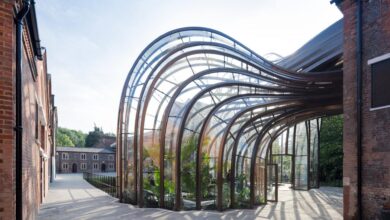
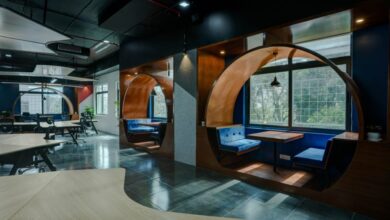
- B. Patterns and Forms: Natural forms are rarely linear. Biophilic design embraces curved lines, organic shapes, and fractal patterns, which are found everywhere in nature, from the branches of a tree to the spiral of a seashell. These forms are visually complex but psychologically comforting.
- C. Evoking Nature through Light: Even without a direct view of the outdoors, a space can mimic the patterns of natural light. Dynamic light fixtures that change in color and intensity throughout the day can simulate the changing light from sunrise to sunset, helping to regulate our body clocks.
Biophilic Design in Action
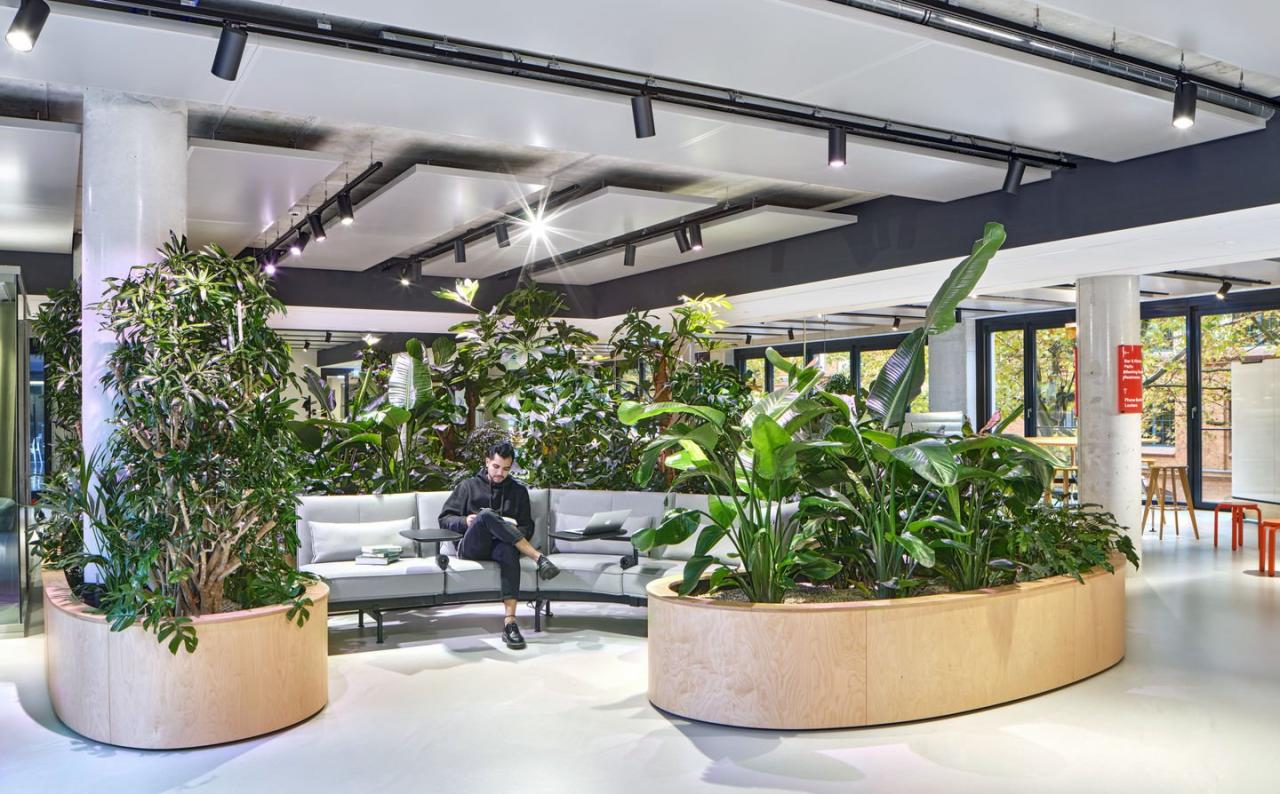
The principles of biophilic design are being applied in innovative ways across a range of different building types.
The Office
Forward-thinking companies are using biophilic design to create workspaces that boost productivity, foster creativity, and reduce employee burnout. Google’s London headquarters, with its lush indoor gardens and timber structures, is a prime example. The goal is to create an environment where employees feel energized and connected, leading to reduced absenteeism and higher job satisfaction.
The Home
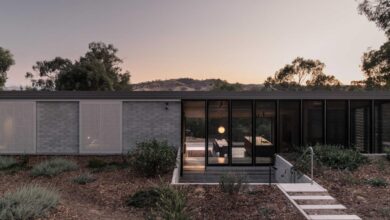
For the residential sector, biophilic design is about creating a personal sanctuary that reconnects us to the outdoors. This can be as simple as orienting a home to maximize natural light and views of a garden, or as complex as integrating an indoor-outdoor living space with a retractable glass wall. The goal is to blur the line between the interior and exterior, making the home a truly restorative place.
The City
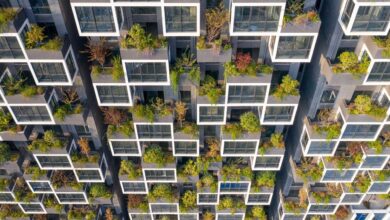
The principles of biophilic design are also being applied on a macro scale to urban planning. This involves creating more green spaces, parks, and rooftop gardens, as well as designing buildings that are integrated with nature, like the “Vertical Forests” in Milan, which are covered with a living façade of trees and shrubs. The goal is to transform the entire city into a more livable, resilient, and human-friendly ecosystem.
The Future of Biophilic Design
As technology advances, biophilic design will become even more sophisticated. We can anticipate several key trends that will shape its future.
- A. Smart Biophilic Systems: Future buildings will have integrated systems that use sensors to monitor environmental data—air quality, light levels, and humidity—and automatically adjust a building’s systems to optimize for human well-being. A building will not just respond to the needs of its occupants; it will proactively anticipate them.
- B. Biophilic Materials and Biomanufacturing: The future will see the rise of innovative, nature-based building materials. We may see materials grown from living organisms, like mycelium, or materials that are self-healing, inspired by the way nature repairs itself.
- C. The Democratization of Design: As architects and designers embrace new tools, biophilic design will become more accessible. AI can help create biophilic design solutions that are not just for luxury projects but can be applied to mass-produced housing and public infrastructure, bringing the benefits of nature to a wider population.
Conclusion
The biophilic design movement is a powerful and overdue response to the unintended consequences of modern urbanization. It is a philosophy that recognizes that our well-being is intrinsically linked to our connection to the natural world, and it provides a clear, science-backed blueprint for creating spaces that foster health, happiness, and productivity. This is not a stylistic trend; it is a fundamental shift in how we think about the purpose of architecture. It moves the conversation from the purely aesthetic to the deeply human.
By integrating natural light, living systems, and organic materials into our built environments, architects and designers are not just building structures; they are crafting experiences. They are creating spaces that reduce our stress, restore our mental energy, and strengthen our sense of connection to the world around us. This is a design approach that is more sustainable, more ethical, and ultimately, more successful because it is rooted in a timeless truth: we are, and will always be, a part of nature. The future of architecture will be defined by its ability to not just shelter us from the elements, but to re-immerse us in the natural world. This is the blueprint for a future that is not just smarter and more connected, but also more alive.