The buildings we inhabit are more than just shelters; they are profound influences on our physical and mental well-being. For decades, architecture has prioritized aesthetics, efficiency, and cost, often overlooking the fundamental impact a space can have on human health. However, a revolutionary new architectural philosophy is emerging from this realization: Health-Focused Architecture. This isn’t just a trend; it’s a fundamental shift that places human wellness at the very core of the design process. It is a powerful response to the modern human condition, where we spend over 90% of our lives indoors, often exposed to a cocktail of pollutants, poor lighting, and a profound disconnect from the natural world. This article will serve as a comprehensive exploration of health-focused architectural innovations, delving into the scientific principles that guide it, the groundbreaking technologies that enable it, and the immense potential it holds for creating environments that are not just functional, but truly restorative and life-enhancing. We will examine how this movement is reshaping everything from offices and homes to schools and hospitals, proving that our built world can be a powerful force for a healthier, happier, and more productive society.
The Mind-Body Connection
The philosophy of health-focused architecture is built on a growing body of scientific research that demonstrates the undeniable link between our environment and our well-being. This isn’t just about good air quality; it’s a holistic approach that considers every sensory and psychological input.
A. Biophilia: Our Innate Connection to Nature
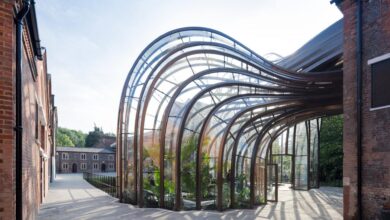
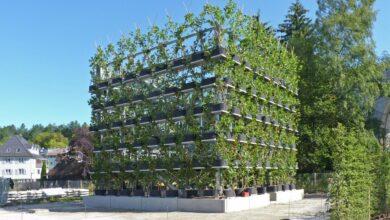
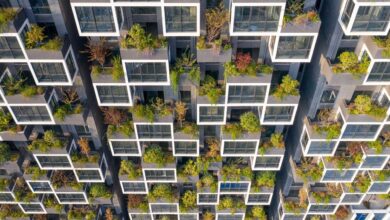
The term biophilia, coined by biologist Edward O. Wilson, refers to the innate human affinity for nature. Studies have shown that a lack of exposure to natural elements can increase stress, reduce cognitive function, and diminish overall health. Health-focused architecture leverages this innate connection by weaving natural elements and processes into the built environment. This can be as simple as maximizing access to natural light and views of nature, or as complex as integrating living walls and water features. The mere presence of nature in a space has been shown to lower cortisol levels, the body’s primary stress hormone, and to improve our ability to focus.
B. Circadian Rhythms and Natural Light
Our bodies are governed by an internal clock, or circadian rhythm, which regulates our sleep-wake cycle, hormone production, and metabolism. Natural light, particularly the changing color and intensity of daylight, is the primary signal that regulates this clock. A lack of natural light, or exposure to blue light from screens at night, can disrupt this rhythm, leading to sleep disturbances and a range of health issues. Health-focused architecture prioritizes maximizing natural light with large windows, skylights, and light-reflecting materials. A simple change in a building’s orientation can have a profound impact on its occupants’ physical and mental state.
C. Environmental Psychology: The Impact of Space on Mind
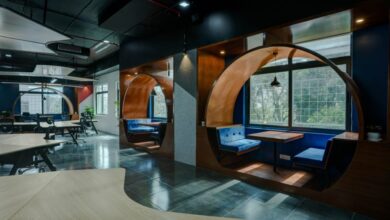
The field of environmental psychology studies how our environments influence our thoughts, emotions, and behaviors. This research has shown that aspects of a space, from its color palette and texture to its layout and acoustic quality, can have a major impact on us. For example, a space with high ceilings and a light, open feel can foster creativity and collaboration, while a space with a more intimate, enclosed feel can be more conducive to focused, solitary work. A well-designed space is not just aesthetically pleasing; it is psychologically comforting.
Innovation in Practice
Health-focused architecture is enabled by a new generation of innovative materials, smart technologies, and design principles.
Air and Water Quality
- A. Active Air Filtration Systems: A health-focused building is an active participant in improving its occupants’ health. It uses advanced air filtration systems that go far beyond a simple HEPA filter. These systems use a combination of technologies, including activated carbon filters and UV sterilization, to remove everything from allergens and dust to volatile organic compounds (VOCs) and airborne pathogens. The building’s HVAC system is designed to provide a constant supply of fresh, filtered air, leading to a significant improvement in indoor air quality.
- B. Non-Toxic Materials: The materials used in a building have a massive impact on its occupants’ health. Many conventional building materials—from paints and adhesives to carpets and furniture—release a cocktail of toxic chemicals into the air. Health-focused architecture prioritizes using a “Red List” of non-toxic materials, from natural paints and finishes to healthy alternatives like bamboo and cork. This is a critical step in creating an environment that is not just aesthetically pleasing, but also free from harmful pollutants.
- C. Water Purification Systems: A health-focused building is designed to provide clean, healthy water. It uses advanced water purification systems that remove everything from chlorine and heavy metals to bacteria and viruses, ensuring that every tap provides a source of clean, safe water. In a truly regenerative model, the building might even be designed to collect, purify, and reuse its own water.
Light and Sound
- A. Smart Lighting Systems: A smart lighting system can automatically adjust a building’s light levels and color temperature throughout the day to mimic natural light, helping to regulate our circadian rhythms. These systems can also be used to create personalized lighting zones, allowing an employee in a smart office to adjust the lighting in their workspace to their preferred settings.
- B. Acoustic Design: The subtle, often unnoticed impact of noise can be a major source of stress. Health-focused architecture prioritizes a building’s acoustic design, using sound-dampening materials and intelligent layouts to reduce noise pollution. This is particularly critical in offices, hospitals, and schools, where a quiet, calm environment can have a major impact on focus and recovery.
- C. Dynamic and Visual Appeal: The design of a space itself can have a major impact on well-being. Architects are using a new, more human-centric aesthetic that incorporates soft, curved lines, natural forms, and a rich, warm color palette that is inspired by nature. This is a powerful antidote to the sterile, rectilinear, and often isolating aesthetic of a traditional building.
The Profound Impact

The widespread adoption of health-focused architecture would have a profound and transformative impact on our society, reshaping everything from our economy to our quality of life.
- A. The Economic Return on Well-being: The investment in health-focused architecture has a clear economic return. Healthy, happy employees are more productive, more creative, and less likely to take sick days. A study by the Harvard T.H. Chan School of Public Health found that workers in green-certified buildings had significantly higher cognitive function and fewer sick days. The investment in a healthier environment is a smart business decision that pays for itself in the long run.
- B. A New Standard for Healthcare: In a hospital, a health-focused design can directly impact a patient’s recovery time. Studies have shown that patients with a view of nature recover faster and require less pain medication. A hospital that is designed to be a sanctuary, with natural light, a calm atmosphere, and a connection to the outdoors, is a powerful tool in the healing process.
- C. A More Equitable Society: In an increasingly urban world, access to a healthy environment is a major issue of social equity. Health-focused architecture provides a blueprint for creating spaces that are healthy for everyone, regardless of their income or location. It is a powerful tool in the fight against environmental injustice and a step toward a more equitable and just society.
Conclusion
Health-focused architecture is more than just a fleeting trend; it is a profound and necessary re-evaluation of the purpose of a building. It is a powerful acknowledgment that our built environment is not a neutral backdrop to our lives, but a dynamic, active participant that can either contribute to our health or detract from it. By designing with a conscience and a deep understanding of human biology and psychology, architects and designers are creating spaces that are not just functional and beautiful but are also actively working to make us healthier, happier, and more productive.
The journey to a healthier, more human-centric world requires a collective effort. It demands that we move beyond a focus on aesthetics and cost and embrace a new set of values where the health and well-being of the occupants are the primary measure of a project’s success. It requires a fundamental shift in mindset from building for machines and efficiency to designing for humanity and empathy. The future of architecture will be defined not by the height of our skyscrapers or the complexity of their forms, but by their ability to connect us to nature, to each other, and to the very best parts of ourselves. The era of human-centric design is not just on the horizon; it is the new blueprint for a better, more humane world.