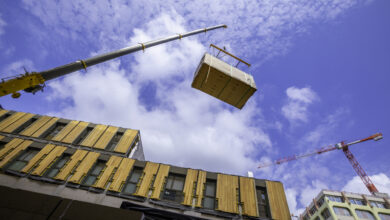
The city, humanity’s greatest invention, has reached a critical inflection point. For over a century, urban planning has been dominated by a car-centric model, prioritizing sprawling highways and isolated residential zones over human-scale communities. The result is a litany of modern urban ills: debilitating traffic congestion, pervasive air pollution, social isolation, and a growing disconnect from nature. The old paradigm, built on the principles of efficiency and convenience for the automobile, is no longer sustainable. We stand on the cusp of a new era of urban design, one that is driven by a fundamental shift in philosophy. The future of our cities is not about building more roads or taller skyscrapers; it’s about creating spaces that are more intelligent, more resilient, and, most importantly, more human. This article will serve as a comprehensive exploration of the transformative trends shaping urban design, from the integration of smart technology and the prioritization of sustainable infrastructure to the return of community-focused living. We will delve into the groundbreaking innovations and the philosophical shifts that promise to reshape our urban centers from static, functional entities into dynamic, thriving ecosystems.
The Three Pillars of Future Urban Design
The cities of tomorrow will be built on a foundation of three core principles, each addressing a critical flaw in our current urban model.
A. Hyper-Connected and Intelligent Infrastructure
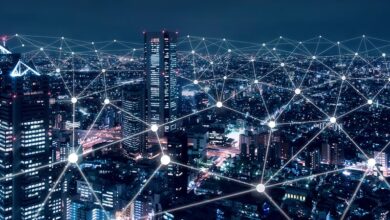
The city of the future will be a living, breathing network of data and technology. This isn’t just about a few smart gadgets; it’s about a fully integrated system that uses data to optimize every aspect of urban life.
- Smart Mobility: The focus is shifting from car ownership to Mobility-as-a-Service (MaaS). This involves an integrated network of public transit, electric scooters, bike-sharing programs, and autonomous vehicles, all managed by a single app. AI-powered algorithms will analyze traffic patterns in real-time, rerouting transit and optimizing traffic light timing to eliminate congestion and reduce commute times. This seamless integration makes a car an unnecessary burden for many urban dwellers.
- Dynamic Urban Management: Smart sensors will be embedded throughout the city, monitoring everything from air quality and noise levels to waste management and public safety. This real-time data will allow city officials to respond to issues proactively, optimizing resource allocation and creating a safer, cleaner environment. For example, a smart waste bin can signal when it’s full, allowing for more efficient garbage collection routes, while smart streetlights can adjust their brightness based on pedestrian traffic to save energy.
- The Digital Twin: Architects and urban planners are now using digital twins—virtual, real-time replicas of a city—to model the impact of new projects before a single brick is laid. This allows them to test different scenarios for traffic flow, energy consumption, and environmental impact, ensuring that every new development is optimized for performance and sustainability.
B. Resilient and Regenerative Ecosystems
The climate crisis and resource scarcity demand that our cities be more than just sustainable; they must be regenerative. This means they must actively give back to the environment and the people who live in them.
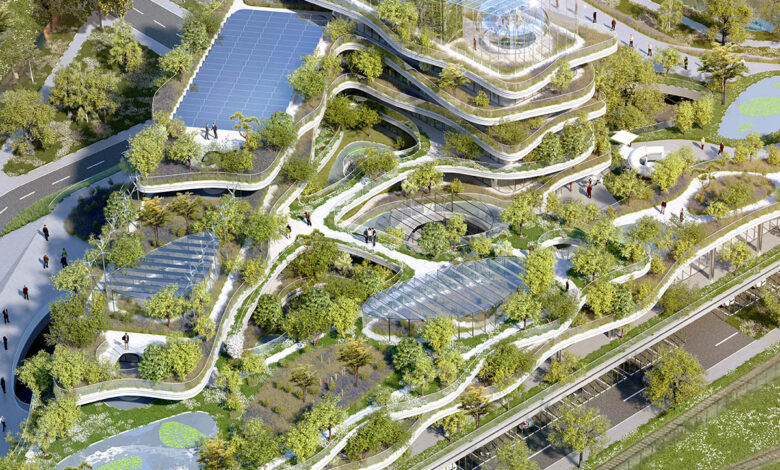
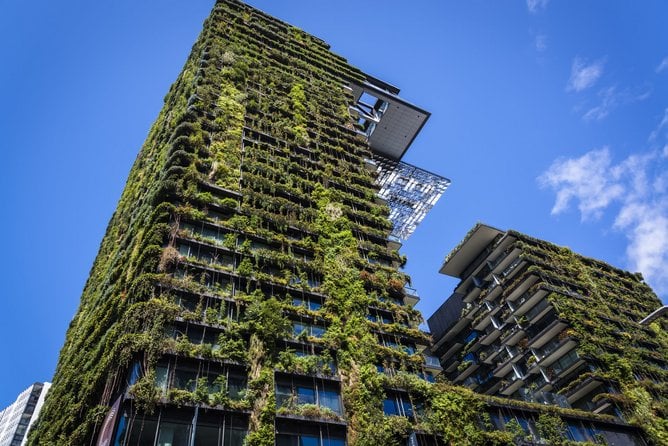
- Biophilic Design and Green Infrastructure: The future city will be infused with nature. Biophilic design, which integrates natural elements like green walls, rooftop gardens, and urban forests into our buildings and infrastructure, is no longer an optional luxury. It’s a core strategy for improving air quality, managing stormwater runoff, and enhancing the mental and physical well-being of residents.
- Circular Economy and Waste-to-Energy: The linear model of “take, make, and dispose” is being replaced by a circular economy. Future cities will have systems for material reuse and recycling, with technology that converts waste into energy. This not only reduces landfills but also creates a new, localized energy source that increases a city’s resilience.
- Water Management: As freshwater becomes a scarcer resource, urban design will prioritize intelligent water management. This includes using smart sensors to detect leaks, incorporating green roofs that absorb rainwater, and building decentralized water treatment facilities that recycle and purify wastewater for non-potable uses like irrigation and flushing.
C. Human-Centric and Community-Focused Spaces
The most important shift in urban design is the return of the human scale. After decades of building for cars, we are now designing for people, with a focus on creating walkable, livable, and socially connected neighborhoods.
- The 15-Minute City: The concept of the 15-Minute City is a powerful vision for the future. It proposes that every urban resident should be able to access all their daily needs—work, school, shopping, healthcare, and recreation—within a 15-minute walk or bike ride from their home. This model reduces reliance on cars, strengthens local communities, and fosters a healthier, more active lifestyle.
- Reclaiming Public Space: As car dependency decreases, roads can be transformed into pedestrian-friendly promenades, bike lanes, and vibrant public parks. The space once dedicated to parking lots can be turned into affordable housing, green spaces, or community centers. The future city will be defined not by its highways, but by its public squares and gathering places.
- Mixed-Use Development: The old zoning laws that separated residential, commercial, and industrial areas are becoming obsolete. The new trend is mixed-use development, which integrates living, working, and retail spaces into a single, compact neighborhood. This creates a dynamic, 24/7 environment that is more efficient, more sustainable, and more socially vibrant.
The Challenges and the Road Ahead
The transition to this new urban paradigm is not without its challenges.
- A. The Digital Divide: The benefits of a smart city can only be realized if everyone has equal access to technology. Addressing the digital divide is a critical social challenge, ensuring that no community is left behind in the race to become smarter and more connected.
- B. Data Privacy and Security: A city that runs on data is a city with major privacy concerns. Urban planners and governments must create robust frameworks to protect citizen data and build public trust in these new technologies.
- C. Funding and Implementation: The cost of transforming a city’s infrastructure is immense. It will require a new model of public-private partnerships and innovative financing to fund these ambitious projects.
- D. Cultural and Behavioral Shifts: The biggest challenge may be changing the behavior of the people who live in these cities. For a new urban model to succeed, people must be willing to embrace new forms of mobility, live in denser communities, and share public spaces. This will require education and a willingness to step outside of our traditional comfort zones.
Conclusion
The future of urban design is not about a single technology or a singular architectural style; it’s about a complete and deliberate reorientation of our cities around the needs of people and the health of our planet. It is a powerful rejection of a past where our environments were designed for machines and a bold embrace of a future where they are designed for humanity. By creating spaces that are more intelligent, more resilient, and more connected, we can solve the most pressing challenges of our time, from climate change to social isolation.
This is a monumental task that requires a collaborative effort from architects, engineers, urban planners, governments, and citizens. It requires us to think not in terms of isolated buildings or individual roads, but in terms of interconnected ecosystems that are designed to evolve and adapt. The cities we build today will be a testament to our collective vision and our willingness to invest in a future that is not just smarter, but also more compassionate and more just. The urban landscape of tomorrow will not just be a place where we live; it will be a dynamic, thriving home that is truly designed for us.